
Navigating the financial landscape of a therapy practice can be daunting. Many therapists struggle with billing complexities and client retention. A superbill can be a game-changer.
A superbill is a detailed invoice for clients. It helps them claim insurance reimbursements. This tool can streamline your billing process and improve cash flow. Superbills are not just about numbers. They enhance client satisfaction by simplifying insurance claims. This can lead to better client retention.
Creating a superbill might seem complex. But with the right template, it becomes manageable. A well-structured superbill template saves time and reduces errors. Superbills include essential details. These are provider information, client data, diagnosis codes, and service dates. Accuracy in these areas is crucial. Therapists don’t submit superbills to insurance companies. Clients do. Educating clients on this process is vital for their experience.
Superbills can be customized to fit your practice’s needs. This flexibility adds value to your services. It can also differentiate your practice in a competitive market.
Using superbills can reduce administrative burdens. They minimize direct insurance billing, freeing up time for client care. Superbills are part of a broader strategy. They improve financial management and client engagement. This can lead to more predictable revenue streams.
Understanding superbills is key to maximizing their benefits. They are an essential tool for therapists, especially those on a fee-for-service basis.
In this guide, we’ll explore superbills in depth. You’ll learn how to create, use, and customize them for your practice.
What Is a Superbill? The Basics Every Therapist Should Know
A superbill is a detailed statement that therapists provide to clients. It is primarily used for insurance purposes. With it, clients can seek reimbursement from their insurance companies.
Therapists who don’t directly bill insurance often use superbills. This allows clients to use their out-of-network benefits. It empowers clients to manage their insurance claims.
Superbills contain essential components. These include provider details, service dates, diagnostic and procedure codes, and service charges. Each element serves a specific purpose.
The information in a superbill must be accurate. Errors can lead to claim denials. Consistency and precision are crucial in creating superbills.
Superbills differ from regular invoices. They include more detailed information necessary for insurance claims. This sets them apart in financial management.
Typically, a superbill is not submitted directly by the therapist. Instead, it is given to clients to send to their insurance. This is why client education is vital.
It’s important to understand the purpose of each section in a superbill:
- Provider Details: Include name, address, and NPI number.
- Client Information: Name, date of birth, and insurance ID.
- Service Details: Dates of service and session types.
- Diagnosis and Procedure Codes: Use CPT and ICD-10 codes. Official guidance from CMS helps ensure accurate coding.
- Charges: Total cost and any payments made.
These components ensure the superbill’s effectiveness. A well-prepared superbill facilitates smoother insurance processes. It enhances the client’s experience and satisfaction.

By mastering superbills, therapists can improve their practice’s efficiency. This ultimately benefits both the therapist and their clients.
Why Superbills Matter: Benefits for Therapists and Clients
Superbills are valuable tools in therapy practice management. They help streamline financial processes. Both therapists and clients benefit from their use.
From a therapist’s perspective, superbills simplify billing. They reduce the need for direct insurance billing. This saves time and decreases administrative burdens. Superbills also contribute to improved cash flow. Clients often pay up front. This immediate payment enhances a practice’s financial stability.
For clients, superbills mean greater access to out-of-network benefits. They can receive insurance reimbursement for services received. This increases the affordability of therapy.
Offering superbills can improve client satisfaction. Clients appreciate transparency in billing. It fosters trust and strengthens client relationships. Superbills can also lead to enhanced client retention. When clients experience smooth reimbursement processes, they are more likely to return. Satisfaction with billing can impact overall client loyalty.
Additionally, superbills provide valuable documentation. They record service details and payments, aiding in financial audits. This level of organization benefits both clients and therapists.
Here’s a look at the primary benefits:
- For Therapists: Simplified billing, improved cash flow, reduced administrative tasks.
- For Clients: Access to benefits, improved satisfaction, detailed documentation.
Superbills can also lead to enhanced client retention. They add value to therapy practices. Consequently, both parties experience enhanced service and trust.
Thus, integrating superbills into daily operations can transform a practice. They contribute to streamlined processes and improved client interactions. These advantages make superbills an essential tool for modern therapy practices.
Key Components of a Superbill for Therapists
A superbill serves as a bridge between therapy sessions and insurance reimbursements. To be effective, it must contain specific information. Including all required elements ensures smooth processing for clients.
At its core, the superbill needs basic provider details. This includes the therapist’s name, address, and contact information. A tax ID or NPI number is also essential.
Client information is another critical component. This typically involves the client’s full name, date of birth, and contact details. Accurate client details help prevent processing delays.
Service details form the bulk of the superbill. This section includes the date of service and a detailed description of the therapy provided. Each service must be properly documented.
Coding is crucial for reimbursement success. Superbills require CPT codes that correspond to the services rendered. Including the appropriate ICD-10 diagnostic codes is also necessary. Refer to CMS ICD-10 resources for accurate coding standards.
Other useful components include:
- Billing Information: Fee for each service and total amount charged.
- Payment Details: Any payments made by the client at the time of service.
These elements help clarify what the client is seeking reimbursement for.
Additionally, it’s advisable to include a note section. This can be used for unique circumstances or additional instructions. It provides flexibility and context to the superbill.
Here’s a quick checklist for components:
- Provider Information: Name, address, contact, and identification numbers.
- Client Information: Name, birth date, contact details.
- Service Details: Dates, descriptions, CPT and ICD-10 codes.
- Financials: Service fees, payments, and totals.
By ensuring these elements are complete and accurate, therapists can minimize errors. A well-prepared superbill aids clients in their reimbursement efforts. It can enhance the practice’s credibility with clients and insurance providers.
All in all, the superbill’s composition is integral to its function. Proper attention to its components maximizes its effectiveness in serving both therapists and clients.
Understanding the Superbill Template: What to Include
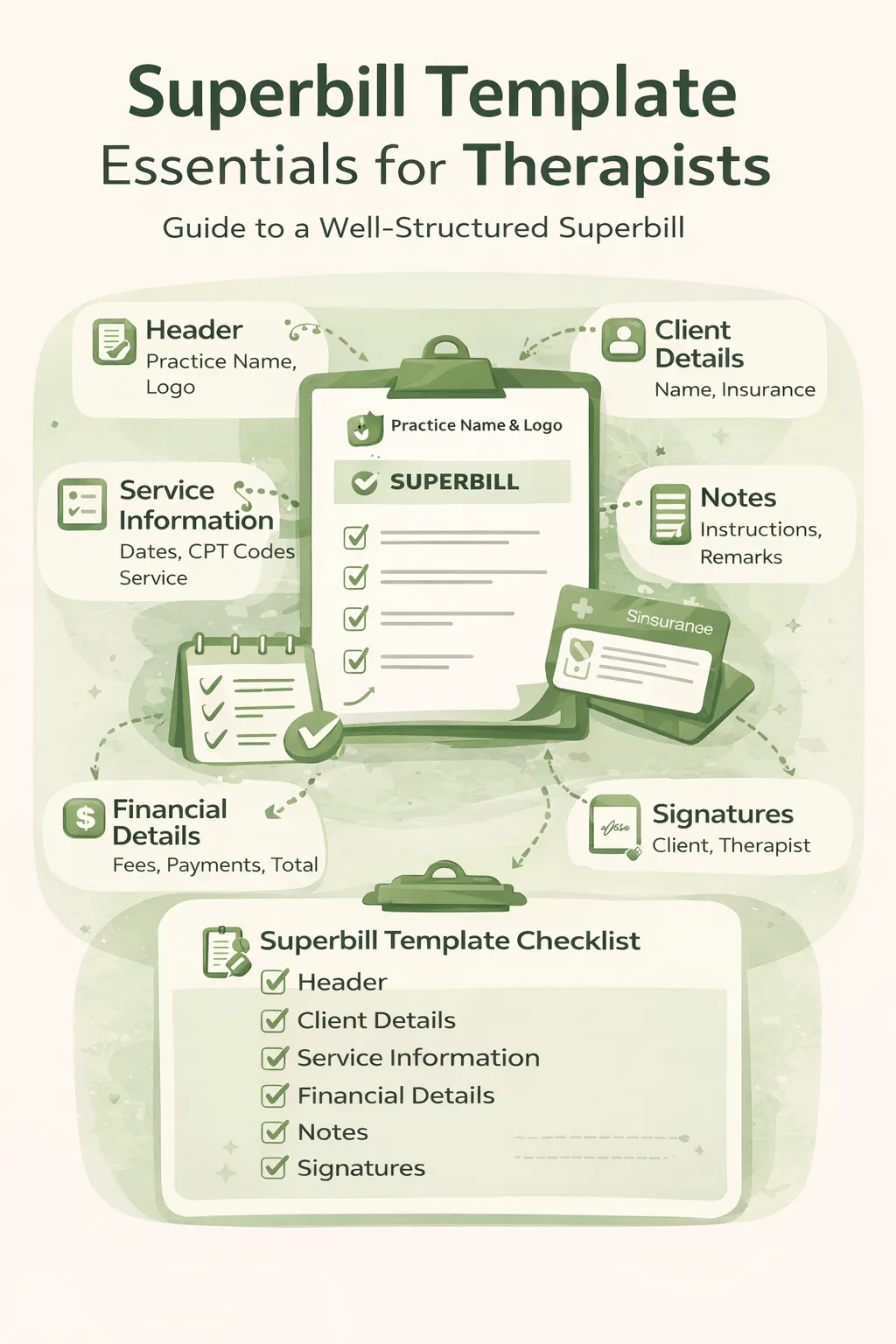
A well-structured superbill template is like a map guiding therapists through the billing process. It ensures no key information is overlooked, making it indispensable.
First, ensure your template includes header information. This usually consists of the practice’s name and logo. A visually appealing header sets a professional tone.
Next, focus on client-specific data. The template should have fields for client identification, such as name and insurance information. Leaving room for these details reduces data entry errors.
The core of your superbill template is the service information section. This should detail all services provided, using both descriptive and coded entries. Always update this section to stay current with codes.
Include customizable fields for service dates. This allows you to specify when each session occurred. Accurate dates ensure the client receives full reimbursement.
Don’t forget the financial breakdown. Include spaces for listing fees per service and any payments already made. This helps clients understand their financial obligations.
A notes area can be invaluable. This section is for any special instructions or additional remarks. Tailor it to the needs of your practice or specific clients.
Lastly, consider a client acknowledgment section. This can include fields for client and therapist signatures. Signatures verify that services were rendered as stated.
Here’s a concise checklist for your superbill template:
- Header: Practice name, logo.
- Client Details: Identification, insurance info.
- Service Information: Dates, CPT codes.
- Financial Details: Fees, payments, total.
Supplementary fields add flexibility:
- Notes Section: Specific instructions, remarks.
- Signatures: Client, therapist.
To visualize, think of the template as a dynamic document. It adapts to different sessions, services, and client needs. By structuring your template thoughtfully, you boost its utility and effectiveness.
A comprehensive superbill template is essential for smooth billing processes. It not only facilitates insurance reimbursement but also strengthens client trust and satisfaction. With the right template, therapists can streamline their practice’s financial management.
Step-by-Step Guide: How to Create a Superbill
Creating a superbill might seem daunting initially, but breaking it down simplifies the process. Here’s a step-by-step approach to creating an effective superbill.
Step 1: Start with the Header
Your header should include your practice’s name and contact details. Ensure it’s clear and professional, providing an immediate point of reference.
Step 2: Client Information
Gather essential details like the client’s full name, address, and insurance ID. This ensures proper identification and minimizes processing errors.
Step 3: Enter Service Details
List each service provided, using proper CPT codes. These codes standardize billing and are vital for insurance reimbursement. Ensure the descriptions are clear and accurate.
Step 4: Include Dates of Service
Record the exact dates services were rendered. This is crucial for reimbursement processing as it aligns with insurance requirements.
Step 5: Financial Breakdown
Clearly detail the cost per service. Add fields for payments made by the client and balance, if any. This transparency aids client understanding and trust.
Check Your Work
Review all entries for accuracy. Correct any discrepancies as these can delay or deny insurance claims. A thorough review prevents unnecessary complications.
Step 6: Add Notes
Include a section for additional notes or special instructions. This can be used to communicate pertinent information about the session or billing.
Collect Signatures
Include a field for both client and therapist signatures. These signatures confirm the services provided and agree to the stated charges.
Remember these key points as you create your superbill:
- Comprehensive Details: Accuracy is vital.
- Clear Format: Ensure readability.
For visual learners, here’s an example layout of a superbill:
Creating a superbill doesn’t have to be complex or time-consuming. With practice, it becomes a routine part of efficient practice management. By following these steps, therapists can ensure that their superbills serve their intended purpose: facilitating smooth and stress-free reimbursement processes. Adjust your superbill according to the specific needs of your practice and stay updated on any changes in codes or billing practices.
Superbills and Mental Health Billing: How They Work Together
Superbills are integral in the realm of mental health billing. They streamline the reimbursement process for out-of-network services. This tool empowers clients to claim insurance reimbursement, a critical aspect of financial management in therapy practices.
For therapists, superbills simplify transactions. By acting as a comprehensive receipt, they eliminate the need for direct dealings with insurance companies. This allows therapists to focus on patient care rather than billing disputes.
Each superbill includes vital coding information such as CPT and ICD-10 codes. These codes represent the services provided and the diagnoses made. Accurate coding ensures that insurance companies understand and process claims correctly.
Superbills also support transparency in billing. Clients gain a clear understanding of the services they receive and their costs. This clarity fosters trust and strengthens the therapist-client relationship.
Clients play an active role by submitting superbills to their insurers. This engagement enhances their understanding of mental health costs. Clients who are informed about financial aspects tend to be more engaged and satisfied.
Moreover, therapists can leverage superbills to track income and analyze service trends. Insight into practice performance helps in strategic planning and identifying growth opportunities.
When combined with mental health billing software, superbills maximize efficiency. Automating the creation and management of superbills reduces errors and saves time.
Here’s a look at how superbills fit into the broader billing process:
- Service Documentation: Detailed recording of client sessions.
- Coding Accuracy: Correctly applied CPT/ICD-10 codes.
- Client Submission: Clients submit to insurers for reimbursement.
- Income Tracking: Monitoring financial trends and performance.
Utilizing superbills effectively streamlines operations and enhances financial stability. They bridge the gap between providing quality therapy and managing the financial realities of a practice. As such, they are an indispensable component of modern mental health billing.
Common Mistakes to Avoid When Using Superbills
Using superbills effectively requires attention to detail. Mistakes can lead to denied claims and frustrated clients. Let’s explore common pitfalls and how to avoid them.
One frequent error is missing or incorrect client details. Ensure all personal and insurance information is accurate. Double-check these details before handing over a superbill.
Incorrect coding is another common issue. Misapplied CPT or ICD-10 codes can result in claim rejections. Always verify that codes match the services provided and diagnoses made.
Timeliness matters as well. Delaying superbill issuance can disrupt the reimbursement process. Aim to deliver superbills to clients promptly after sessions.
Incomplete superbills can also pose problems. Omitting service dates, provider details, or treatment descriptions can confuse insurers. Complete each superbill thoroughly to prevent unnecessary back-and-forth.
Miscommunication with clients is a common oversight. Clients may not understand how to use superbills. Educate them on submission procedures and follow-up actions to ensure smooth reimbursement.
Failing to update superbill templates regularly can lead to outdated billing practices. Keep templates current with the latest billing standards and codes. This practice prevents compliance issues and enhances accuracy.
Lastly, relying solely on manual processes can introduce errors. Consider integrating practice management software to automate superbill creation and minimize mistakes.
Here are key points to watch for:
- Double-check client and insurance information.
- Verify CPT/ICD-10 codes for accuracy.
- Deliver superbills promptly after sessions.
- Ensure superbills are complete and clear.
- Educate clients on reimbursement processes.
- Regularly update superbill templates.
- Utilize software to reduce human error.
Avoiding these common mistakes can improve both client satisfaction and your practice’s financial processes. Proper superbill management is essential for efficient therapy billing and client satisfaction.
How to Educate Clients About Superbills and Insurance Reimbursement
Educating clients about superbills and insurance reimbursement is vital for smooth financial interactions. Clients often feel overwhelmed by the complex world of insurance claims. Simplifying these processes can improve their experience with your practice.
Start by explaining what a superbill is and its purpose. Highlight that it’s a detailed invoice they can submit for insurance reimbursement. Assure clients that using superbills can ease financial burdens by offsetting therapy costs.
Provide clients with a step-by-step guide on submitting superbills to their insurance. Break down the process into manageable tasks. Include instructions on where to send superbills, any necessary forms, and the importance of keeping copies for personal records.
Visual aids can enhance understanding. Use diagrams or flowcharts to illustrate the superbill submission process. These resources can clarify each step, making it easier for clients to follow along.
Host informational sessions or webinars. Offer group meetings to address common questions about superbills and insurance policies. These sessions can foster a sense of community and support among clients.
Create a FAQ section in your practice’s resources. This should cover common superbill-related queries. Keep it concise and accessible to encourage clients to engage with the material.
Provide ongoing support through your staff. Ensure team members are knowledgeable and can assist clients. Encourage clients to reach out for help whenever they encounter issues with superbills.
Key strategies include:
- Simplifying the superbill explanation.
- Offering step-by-step submission guides.
- Using visual aids to illustrate the process.
- Hosting informational sessions.
- Developing an informative FAQ section.
- Ensuring staff is ready to assist clients.
By educating clients, you empower them to navigate insurance claims confidently. This proactive approach can significantly enhance client satisfaction and retention.
Using Superbills to Improve Client Retention and Satisfaction
Superbills can play a key role in improving client retention and satisfaction in therapy practices. Clients often look for value in the services they receive, and offering superbills can enhance this perceived value.
Providing superbills shows that you understand clients’ financial challenges. It demonstrates your commitment to helping them manage costs. This can foster a stronger relationship between you and your clients.
One of the main advantages of superbills is that they empower clients. By enabling them to file their own insurance claims, clients feel more in control of their healthcare expenses. This empowerment can lead to increased client loyalty and satisfaction.
Clients who successfully receive reimbursements from their insurance providers are likely to have a positive view of your practice. This positive experience can reduce client turnover and even lead to referrals from satisfied clients.
To ensure clients maximize the benefits of superbills, make the process as seamless as possible. Offer clear instructions and assistance if needed. A hassle-free experience can greatly enhance client satisfaction.
Regularly check in with clients to gather feedback on your superbill process. Use this information to make improvements and address any issues that may arise. Demonstrating a willingness to improve can further increase client trust and retention.
Key points to focus on include:
- Demonstrating your understanding of financial challenges.
- Empowering clients to manage costs.
- Creating a seamless superbill process.
- Gathering client feedback for continuous improvement.
Effectively leveraging superbills as part of your practice can have significant benefits. It can lead to sustained client relationships and long-term success for your practice.
Superbills and Practice Management Software: Streamlining Your Workflow
Integrating superbills with practice management software can dramatically improve your workflow. This technology reduces administrative burdens and increases efficiency in your therapy practice.
Practice management software automates superbill generation. It automatically populates essential fields, minimizing manual input errors. This automation saves time and reduces the chance of discrepancies.
Sophisticated software can directly integrate with electronic health records (EHR). This ensures that superbills have the latest, most accurate client information. Consistency in client data leads to fewer claim rejections.
Software solutions also facilitate easy customization of superbill templates. You can tailor templates to include unique practice details, making it easier to meet diverse client needs. Flexibility and adaptability are key advantages here.
Choosing the right software solution requires careful consideration. Look for features like user-friendly interfaces, robust customer support, and regular updates. These features ensure that your practice runs smoothly and efficiently.
When implemented effectively, practice management software can lead to several improvements, such as:
- Reducing time spent on administration tasks.
- Increasing accuracy of billing documents.
- Enhancing client and staff satisfaction.
- Streamlining communication with clients regarding their insurance submissions.
Integrating practice management software into your workflow is a strategic move. It aids not only in streamlining operations but also in boosting client satisfaction. By leveraging technology, your practice can provide top-tier service and achieve greater financial health.
Customizing Your Superbill Template for Your Practice
Creating a superbill that reflects your unique practice is essential. Customization ensures that you meet the specific needs of both your practice and your clients. Personalization can differentiate you in a competitive therapy market.
Start by identifying the services you offer. Make sure each is accurately represented with current CPT codes. This will facilitate smoother insurance processing and enhance client satisfaction.
Consider the layout and design of your superbill. A clean and professional appearance reflects positively on your practice. Ensure the document is easy to read, with a logical flow of information.
Customization can also mean adding specific fields. You might include space for special instructions or notes pertinent to a session. This additional detail can be invaluable for both record-keeping and client communication.
Regularly review your superbill template. Keep it updated with any changes in billing codes or service offerings. Staying current helps in maintaining compliance and preventing claim rejections.
To help with template customization, consider these steps:
- Review the necessary components, such as diagnosis and service codes.
- Include optional fields for additional notes or client feedback.
- Ensure your branding elements, like logos, are present.
Tailoring your superbill template is more than a billing necessity. It’s a reflection of your practice’s identity and commitment to exceptional client care. A personalized superbill template ultimately strengthens your practice’s brand and client trust.
Legal, Ethical, and Compliance Considerations for Superbills
Adhering to legal and ethical standards is vital when creating and using superbills. Compliance helps avoid potential legal issues and maintains trust with clients. It ensures that your practice operates within set guidelines and standards.
First, protect client privacy by complying with HIPAA regulations. This involves safeguarding all client information included on a superbill. Only share details that are necessary for insurance purposes.
Ensure accuracy in the information presented. Mistakes in codes or details can lead to claim denials or issues with insurance companies. Accurate superbills reflect professionalism and attention to detail.
Consistently update your superbill template to reflect any changes in billing codes. This prevents outdated information from being used, which can lead to compliance problems. Regular updates are necessary to match current standards.
Ethical considerations involve transparency with clients. Clearly explain what a superbill is and how they can use it for insurance reimbursement. This promotes trust and empowers clients to manage their healthcare needs.
For a compliant superbill:
- Verify client information regularly for accuracy.
- Use the most current CPT and ICD-10 codes.
- Follow state and federal regulations closely.
Focusing on legal and ethical considerations in superbills not only safeguards your practice but also enhances client confidence in your services. Compliance is key to sustaining a reputable and successful therapy practice.
Frequently Asked Questions About Superbills for Therapists
Therapists often have questions about superbills. Addressing these queries helps clarify their use and benefits. Here we cover some common questions therapists have.
What is a superbill?
A superbill is a document therapists give clients. It details services rendered and is used for insurance reimbursement. Unlike typical invoices, superbills contain specific medical codes.
How does a superbill differ from a regular bill?
Superbills include CPT and ICD-10 codes necessary for insurance claims. Regular bills typically do not have these codes, focusing on payment collection instead.
Can clients submit superbills on their own?
Yes, clients submit superbills to their insurance companies for reimbursement. It’s essential they understand this process to ensure successful claims.
What should a superbill include?
A proper superbill includes provider details, diagnosis codes, service dates, and fees. Accurate information facilitates smooth processing by insurance.
Are superbills necessary for all therapy practices?
Not all therapists use superbills. They are most beneficial for out-of-network billing, where clients seek reimbursement directly from insurance.
How do superbills affect client satisfaction?
Providing superbills can enhance client satisfaction. They empower clients to handle their reimbursement, improving engagement and retention.
What common errors occur in superbills?
Common mistakes include incorrect codes and missing information. Regular review and updates help maintain accuracy.
Is there technology to help with superbills?
Yes, many practice management software solutions assist with creating and managing superbills. These tools streamline the billing process.
For therapists seeking clarity, understanding superbills can significantly benefit practice management and client relations.
Resources and Tools: Where to Find Superbill Templates and Support
Finding the right superbill templates and resources can simplify your billing process. Many tools are available online to assist therapists. These resources help enhance financial efficiency.
Numerous websites offer downloadable superbill templates. These templates are customizable to suit specific practice needs. This flexibility makes it easier to start implementing superbills immediately.
Practice management software often includes superbill generation features. These software solutions integrate billing tasks within a broader management system. They can enhance the overall workflow of your practice.
For more comprehensive support, consider joining professional organizations. These groups provide resources and advice on superbills. They also offer networking opportunities for peer support.
Here are some helpful resources and tools:
- Online Template Libraries: Download customizable superbill templates.
- Practice Management Software: Find integrated superbill features.
- Professional Organizations: Access resources and networking opportunities.
- Continuing Education Seminars: Learn about updates in billing practices.
Utilizing these tools and resources can streamline your superbill process. This ultimately supports better practice management and client outcomes.
Conclusion: Making Superbills Work for Your Therapy Practice
Superbills can transform the financial management of your therapy practice. By integrating them effectively, you can streamline billing and enhance client satisfaction. They are essential tools for maintaining a healthy practice.
Educate yourself on the components and best practices of superbills. Tailoring superbills to meet the specific needs of your practice can add significant value. This customization helps in reflecting the unique services you offer.
Client education is a vital part of this process. Empower clients by showing them how superbills facilitate insurance reimbursements. This not only helps them but also builds stronger client relationships.
Consider leveraging practice management software for creating superbills. This can automate processes, reducing manual errors and saving time. Technology in practice management boosts efficiency and helps sustain growth.
Ultimately, superbills serve as a critical link between therapists and clients. They ensure transparency and simplify the complex world of insurance billing. With thoughtful implementation, superbills can greatly enhance your practice’s financial health and client loyalty.