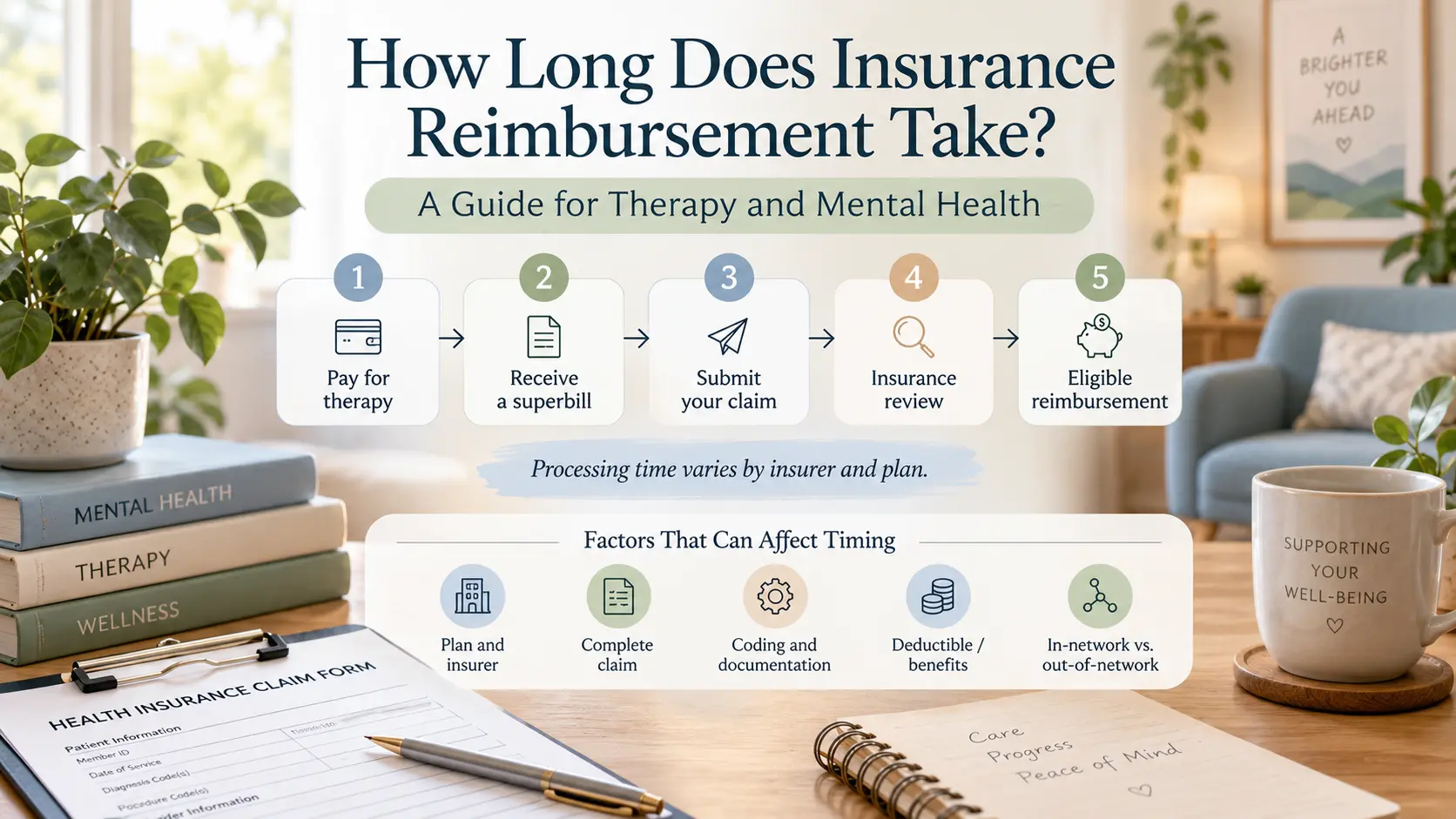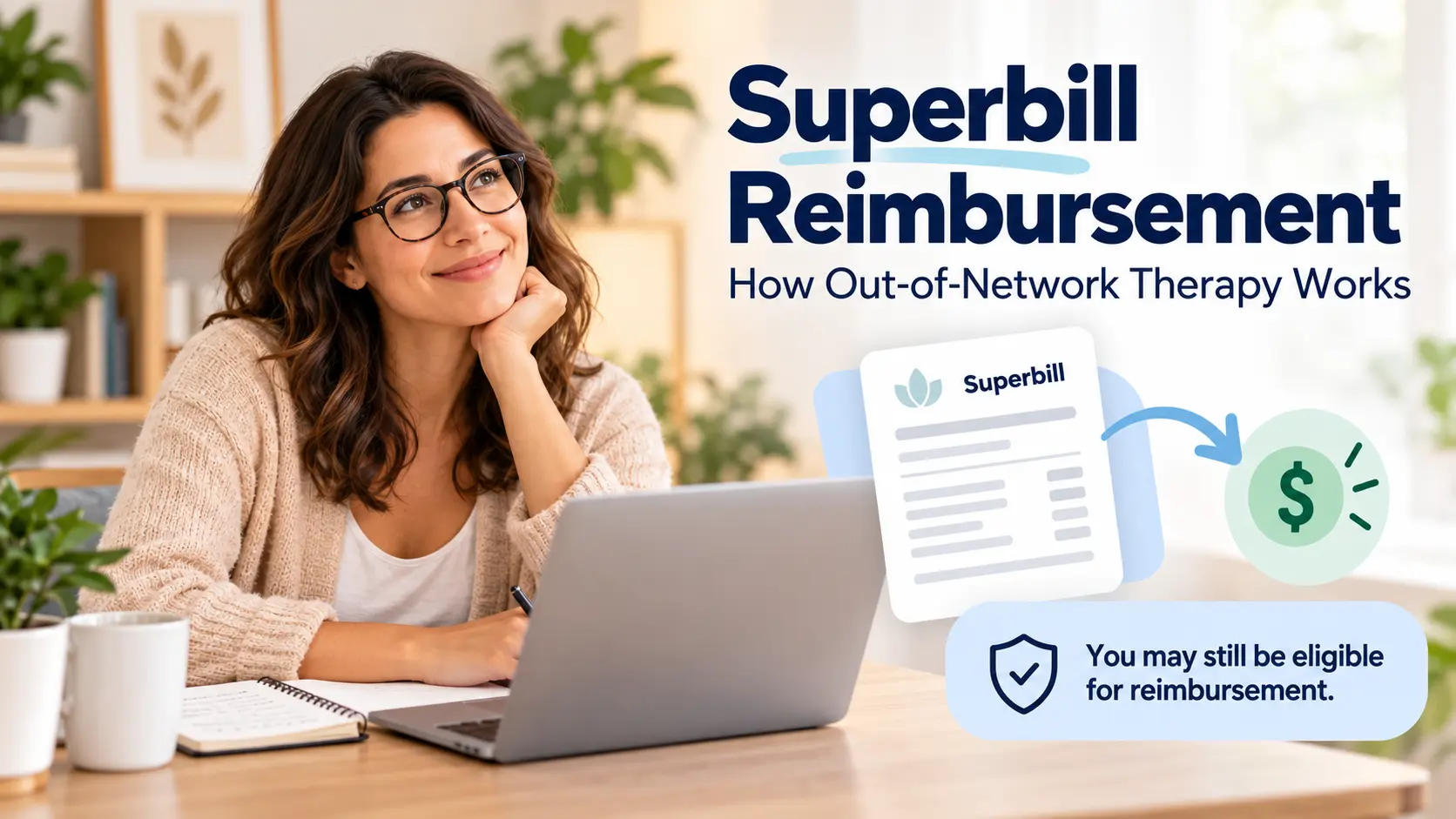
Getting on insurance panels is one of the most common — and most frustrating — steps therapists face when building a practice.
You didn’t train for years to spend hours on applications, follow-ups, and paperwork. But if you want to work with insured clients, insurance paneling becomes part of the process.
**An insurance panel is a network of approved providers that an insurance company reimburses for services.**If you’re not on a panel, you’re considered out-of-network.
This guide breaks down:
- how to get paneled with insurance
- whether it’s worth it
- what the process actually looks like
- and what alternatives exist in 2026
What does it mean to be paneled with insurance?
When therapists ask “what does it mean to be paneled with insurance?”, they’re usually trying to understand how it affects their practice.
Being paneled means:
- you are approved by an insurance company
- you agree to their reimbursement rates
- you can bill insurance directly
It also means working within certain constraints — from pricing to documentation.
To panel or not to panel: what therapists should consider
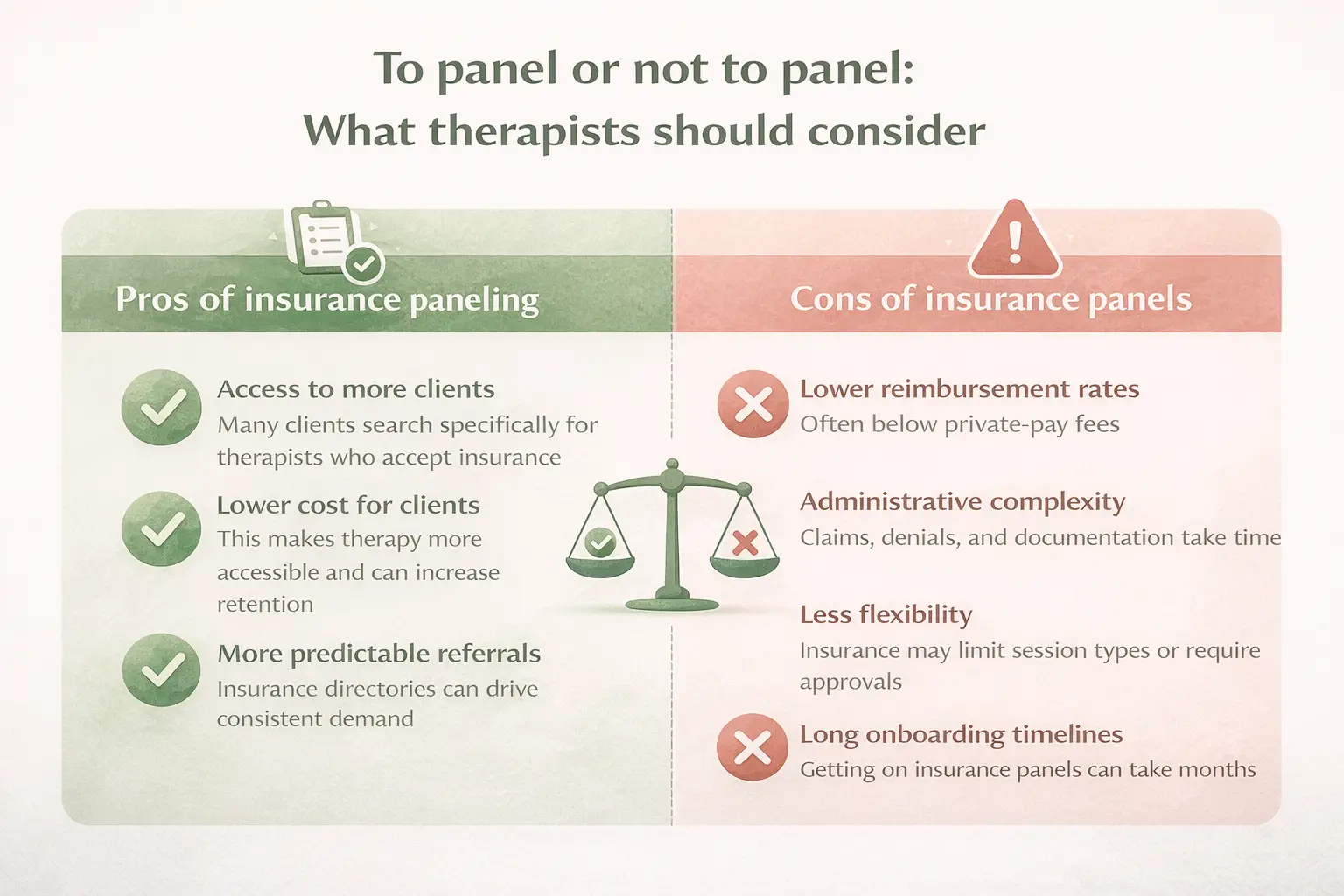
Deciding whether to join insurance panels isn’t just administrative — it’s strategic.
Pros of insurance paneling
- Access to more clientsMany clients search specifically for therapists who accept insurance
- Lower cost for clientsThis makes therapy more accessible and can increase retention
- More predictable referralsInsurance directories can drive consistent demand
Cons of insurance panels
- Lower reimbursement ratesOften below private-pay fees
- Administrative complexityClaims, denials, and documentation take time
- Less flexibilityInsurance may limit session types or require approvals
- Long onboarding timelinesGetting on insurance panels can take months
How to get on an insurance panel (step-by-step)
If you’re searching how to get on an insurance panel, here’s what the process actually looks like in practice. The American Psychological Association explains how insurance participation affects both clinical and business decisions.
1 Prepare your credentials
Before applying, you’ll need:
- active state license
- liability insurance
- NPI (National Provider Identifier)
- updated CV
- CAQH profile (see CAQH provider portal for setup and updates)
Missing even one of these can delay your application.
2 Research the right insurance panels
Not all insurance panels for therapists are worth joining.
Focus on:
- plans common in your area
- panels your ideal clients actually use
- reimbursement rates vs your target income
👉 This step matters more than most therapists expect.
3 Apply to provider panels
Once you’ve selected companies, you’ll apply to their provider panels.
This usually involves:
- long applications
- document uploads
- background verification
Accuracy is critical — small mistakes can restart the process.
4 Go through credentialing
Credentialing is the verification stage. The CMS provider enrollment guidelines outline how this process works across insurers.
It can take:
- 60–120 days (sometimes longer)
During this time, insurance companies:
- verify licenses
- check references
- review your history
5 Review and sign contracts
If approved, you’ll receive a contract.
Before signing, review:
- reimbursement rates
- session limits
- billing rules
You don’t have to accept every offer.
How to get paneled with insurance faster (realistically)
Many therapists search for ways to speed up how to get paneled with insurance.
The reality:
- you can optimize the process
- but you can’t fully shortcut it
What helps:
- complete CAQH profile (fully + accurately)
- respond quickly to requests
- apply to multiple panels at once
Why many therapists choose not to panel
In 2026, more therapists are reconsidering whether traditional insurance panels are the best path.
Common reasons:
- reimbursement rates don’t match market pricing
- administrative work reduces time with clients
- delays affect cash flow
This is why many practices are moving toward hybrid or out-of-network models.
The alternative: working outside insurance panels
If you’re not on insurance panels, you’re considered out-of-network.
That doesn’t mean clients can’t use insurance.
Out-of-network therapy allows clients to pay upfront and receive reimbursement from their insurance provider.
This model gives therapists:
- full control over pricing
- more flexibility in care
- less administrative burden
But it can create friction for clients — especially around cost and claims, which can impact client retention.
Where Deputy Care fits in
This is where the landscape has shifted significantly.
Instead of choosing between:
- being fully paneled (with lower rates and admin work)
- or fully private pay (with client friction)
there’s now a middle ground.
With Deputy Care:
- therapists can work with out-of-network clients
- clients can still use their insurance benefits
- claims and reimbursement are handled in the background
This means:
- you’re not limited to insurance panel rates
- clients aren’t blocked by upfront complexity
- you can grow your practice without going through months of paneling
For many therapists, this changes the decision entirely.
How to stay on insurance panels (if you choose to)
If you do decide to panel, staying credentialed is ongoing.
You’ll need to:
- reattest your CAQH profile regularly
- keep licenses and documents updated
- track deadlines across panels
Missing updates can result in removal from panels — and lost revenue.
Final thoughts
Getting on insurance panels can expand your reach — but it comes with trade-offs.
For some therapists, it’s the right move. For others, it becomes an ongoing administrative burden that limits flexibility.
In 2026, the decision is no longer just **“how to get paneled with insurance.”**It’s:
👉 Do you actually need to?
With newer models and platforms, therapists now have more control over how they build sustainable, accessible practices — without relying entirely on traditional insurance systems.
FAQ
How do I get on insurance panels as a therapist?
You need to apply to insurance companies, complete credentialing, and sign contracts. The process typically takes 2–4 months.
What are insurance panels?
Insurance panels are networks of approved providers that an insurance company reimburses for services.
Is it worth getting paneled with insurance?
It depends on your goals. Paneling can increase client volume but often comes with lower rates and more administrative work.
How long does insurance paneling take?
Most applications take between 60 and 120 days, depending on the insurer and completeness of your application.
Can I work with insurance without being paneled?
Yes. You can work out-of-network, where clients pay upfront and get reimbursed by insurance.