Reaching out to a therapist for the first time can feel surprisingly difficult. According to NHS, talking therapies are a common first step in mental health support.
You might have already found a few people you’re considering. Maybe you’ve even opened a blank email and then paused.
What should I say? How much should I share? Am I doing this right?
If that sounds familiar, you’re not alone. Emailing a therapist is the most common way to start therapy , but it’s rarely the part people struggle with most.
Quick answer: how to email a therapist
If you’re wondering how to email a therapist for the first time, here’s a simple structure:
- Introduce yourself briefly
- Say what you want help with
- Share your availability
- Ask about cost and insurance
- Request a consultation
A good first email is short — usually no more than 5–8 sentences.
Why emailing a therapist is usually the easiest option

If you’re deciding how to contact a therapist for the first time, email tends to feel more manageable than calling. It gives you space to think through what you want to say, without pressure. You can also reach out to multiple therapists and compare responses instead of committing too quickly.
For many people, emailing a therapist simply removes that initial friction.
What therapists actually expect from a first email
One helpful thing to know: therapists don’t expect a perfect message. The American Psychological Association notes that therapy often begins with simple, open communication.
They’re not looking for your full story or a detailed explanation of everything you’ve been going through. A short, clear introduction is enough.
In most cases, your email just needs to cover:
- a brief introduction
- what you’d like help with
- scheduling preferences
- a couple of practical questions
How to email a therapist for the first time (example)
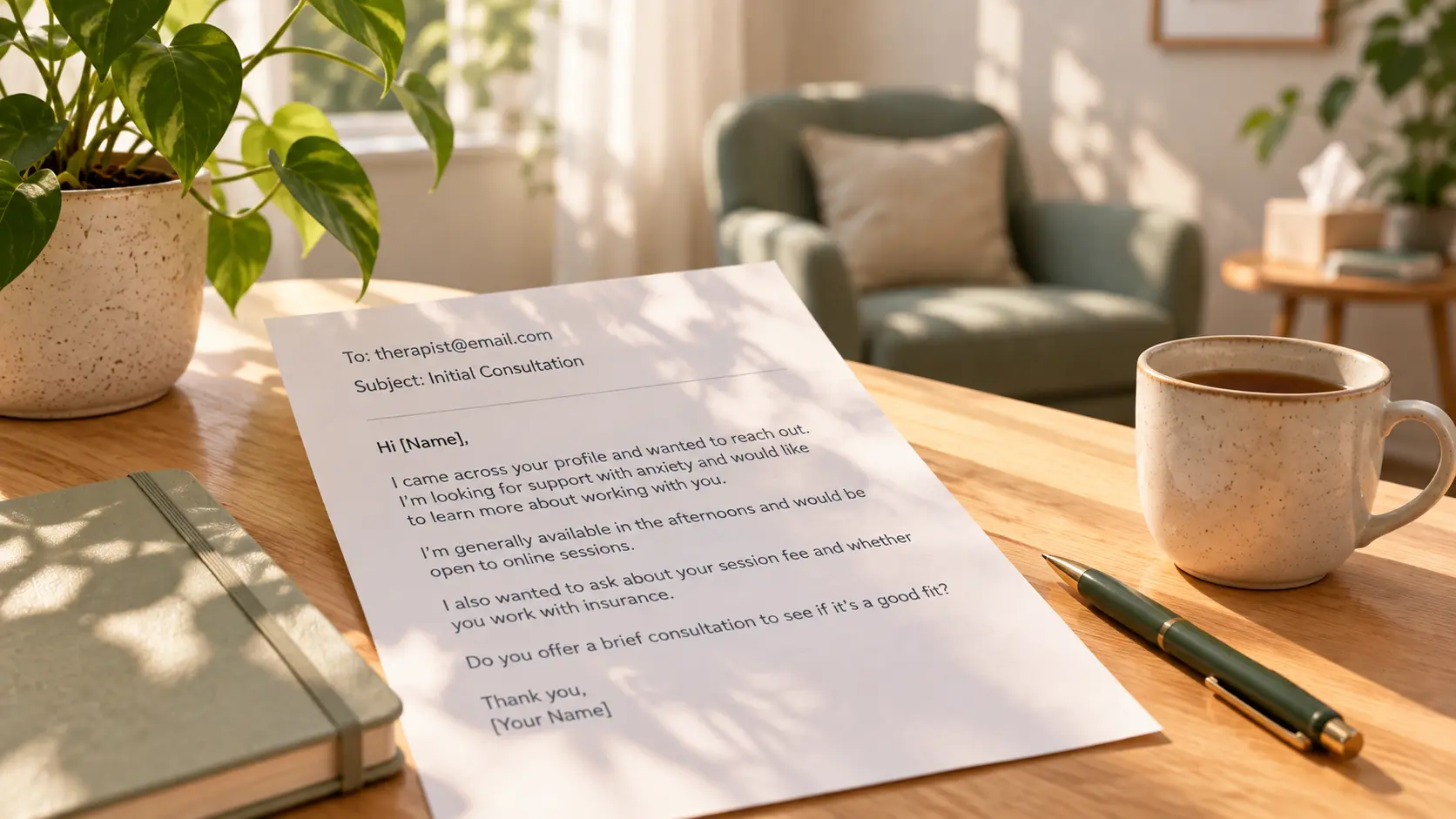
If you’re looking for a how to email a therapist example, here’s a simple version you can adapt:
Hi Name,
I came across your profile while looking for support with anxiety and wanted to reach out. I’ve been dealing with this for a while and would like help managing it more effectively.
I’m generally available in the afternoons and would be open to online sessions.
I also wanted to ask about your session fee and whether you work with insurance.
Do you offer a brief consultation to see if it’s a good fit?
Thank you, Your Name
How to contact a therapist for the first time email (what to include)
When people search for how to contact a therapist for the first time email, what they really need is clarity.
You don’t need to write a long message. But you do want to include the right questions — especially about cost.
It helps to ask:
- What is your session fee?
- Do you accept insurance?
- If not, do you offer out-of-network reimbursement?
These questions may feel practical, but they make a big difference later.
How to reach out to a therapist and choose the right one
It’s common to spend a lot of time trying to find the “perfect” therapist before reaching out. Resources like Psychology Today explain why contacting several therapists often leads to better results.
In reality, it’s often more effective to contact a few and see how they respond.
- some may not be available
- some may not specialize in your needs
- some may not feel like the right fit
Sending several thoughtful emails usually leads to better options than trying to make the perfect choice upfront. Platforms like Deputy Care can also help you explore and connect with the right therapists more efficiently.
The part most people don’t think about
At this point, emailing a therapist might feel much more manageable.
But there’s another part of the process that tends to catch people off guard — and it comes after that first reply.
It’s the cost.
Understanding how therapy and insurance actually work
Many therapists today don’t work directly with insurance companies.
This doesn’t mean your insurance won’t help — it just means the process is different.
You may hear terms like:
- out-of-network benefits
- reimbursement
- superbills
Out-of-network therapy means you pay for sessions upfront, and your insurance may reimburse part of the cost later.
Why cost becomes the reason people stop
For many people, therapy doesn’t end because it isn’t helping.
It ends because it becomes difficult to sustain financially.
- session fees can range from $150–$200+
- deductibles often need to be met first
- reimbursement can take weeks
As a result, many people stop after just a few sessions — often right before therapy starts to feel useful.
What to ask about insurance before you commit
To avoid surprises, it helps to ask a few questions early on:
- What is the full session cost?
- What do clients typically get reimbursed?
- How long does reimbursement take?
Even simple answers can give you a clearer picture of what to expect.
Where Deputy Care can make this easier
This is the part many people end up handling on their own — figuring out insurance, submitting claims, and waiting for reimbursement.
With Deputy Care, you’re not limited to therapists who accept insurance. You can choose the therapist you want to work with — even if they’re out-of-network — and still use your insurance benefits.
Instead of managing everything yourself, Deputy Care helps you:
- see an estimate of your real session cost before you start
- understand your benefits upfront
- pay only your expected portion instead of the full fee
- have claims handled in the background
For many people, this removes the feeling that you have to choose between the right therapist and something you can afford long-term.
Final thoughts
If you’ve been hesitating to reach out, it’s okay to keep things simple.
You don’t need a perfect email. You don’t need the perfect words.
You just need to start the conversation.
And once you do, having a clear understanding of cost and insurance can make the rest of the process feel much more manageable — so you can focus on what actually matters: getting support.
FAQ
How do you email a therapist for the first time?
Keep your message short. Introduce yourself, briefly explain what you need help with, share your availability, and ask about cost and consultation.
What should I say when emailing a therapist?
Mention your main concern, your goal for therapy, and ask practical questions like session fees and insurance options.
Is it better to call or email a therapist?
For most people, emailing a therapist is easier and more flexible, especially for first contact.
How many therapists should I contact?
It’s a good idea to reach out to several therapists to compare responses and find the right fit.
What if a therapist doesn’t take insurance?
You may still have out-of-network benefits, meaning your insurance can reimburse part of the cost after you pay.