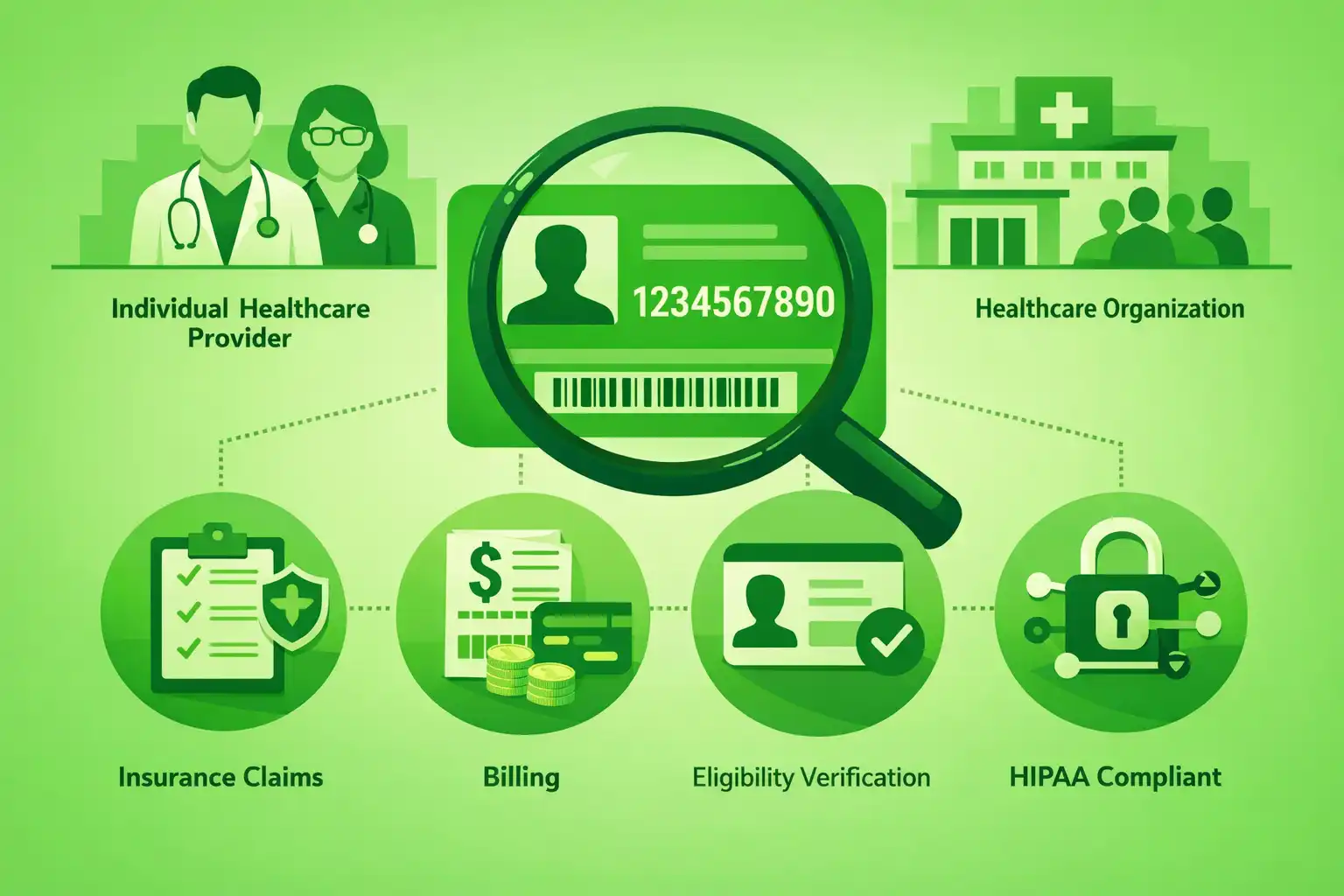
The NPI Registry is a free public directory maintained by the Centers for Medicare & Medicaid Services (CMS) that contains all active National Provider Identifier (NPI) records in the United States.
If you submit insurance claims—especially as an out-of-network provider - your NPI Registry information plays a direct role in whether you get paid quickly or face delays.
What Is an NPI (National Provider Identifier)?
An NPI is a unique 10-digit identification number assigned to:
- Individual healthcare providers (therapists, psychologists, physicians)
- Healthcare organizations (group practices, clinics)
This number serves as your standardized identity across the healthcare system and is required for:
- Insurance claim submissions
- Billing and reimbursement
- Eligibility verification
- HIPAA-compliant administrative transactions
Without an NPI, providers cannot process claims or receive payments from insurance companies.
What Information Appears in the NPI Registry?
After applying through the National Plan and Provider Enumeration System (NPPES), your public profile is published in the NPI Registry.
This includes:
- Provider or organization name
- Practice address (must match billing records)
- Taxonomy (your specialty classification)
- Contact details
Insurance companies rely on this exact data when reviewing and approving claims.
Why Updating Your NPI Registry Information Is Critical
Many providers treat their NPI like a one-time setup.
It’s not.
Even small errors can lead to insurance claim delays or denials, especially if your information doesn’t match what payers expect.
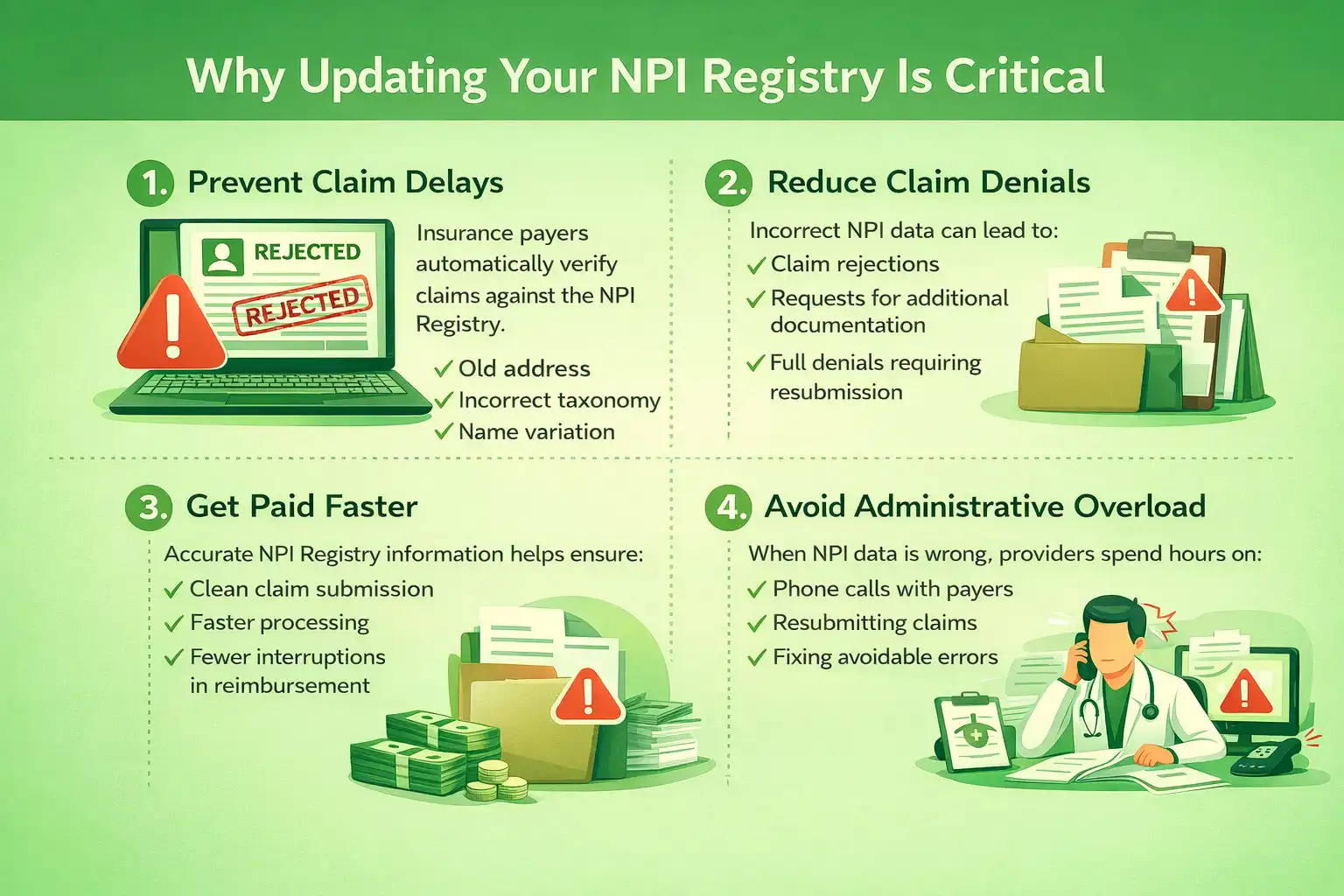
1 Prevent Claim Delays
Insurance companies automatically verify claims against the NPI Registry.
If there’s a mismatch—like:
- An outdated address
- Incorrect taxonomy
- Name differences
Your claim can be delayed or flagged for review.
This is especially common with out-of-network reimbursement, where verification is stricter.
2 Reduce Claim Denials
Incorrect NPI data often leads to:
- Insurance claim denials
- Requests for additional documentation
- Full resubmissions
These issues create unnecessary back-and-forth and slow down payments.
3 Get Paid Faster
When your NPI information is accurate:
- Claims are processed more smoothly
- Payments arrive faster
- Revenue becomes more predictable
Using a system with strong claims management can further reduce delays and errors.
4 Avoid Administrative Overload
Fixing NPI-related issues takes time.
Providers often end up:
- Calling insurance companies
- Resubmitting claims
- Fixing preventable billing errors
Keeping your NPI updated helps you avoid this extra work.
Where Deputy Care Helps
Most providers only discover NPI issues after a claim is denied.
Deputy Care helps prevent that.
With billing support for providers and automated follow-ups:
- Claims are checked before submission
- Errors (including NPI mismatches) are caught early
How to Update Your NPI Registry Information (Step-by-Step)
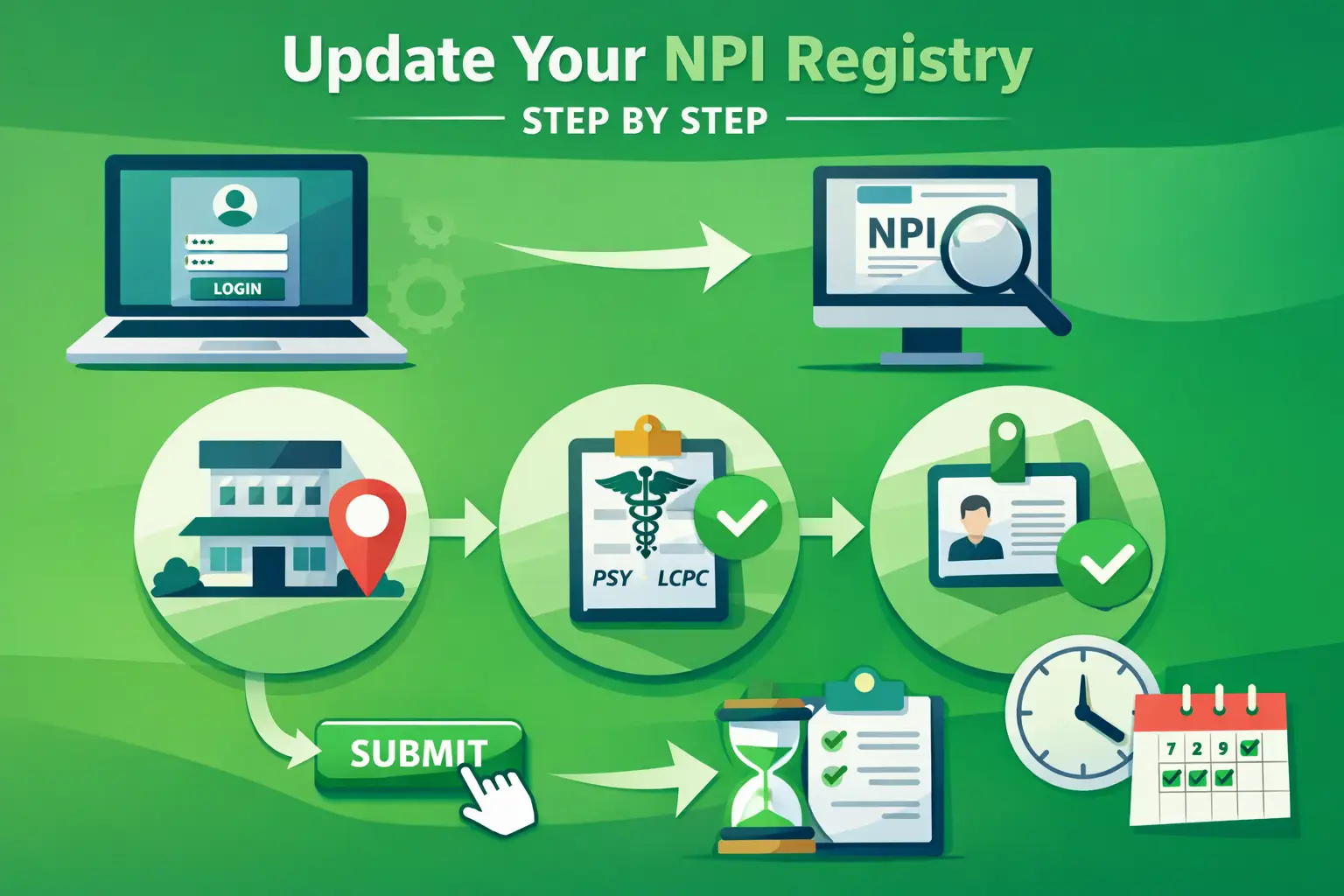
To update your NPI record:
- Log in to the NPPES system
- Select your NPI record
- Update:
- Practice address
- Taxonomy
- Name and credentials
- Submit changes
Most updates appear in the NPI Registry within a few days.
How to Check Your NPI Registry Listing
You can verify your information by searching your name or NPI number in the official registry.
👉 https://npiregistry.cms.hhs.gov/
Make sure:
- Your address matches your billing location
- Your taxonomy reflects your services
- Your name and credentials are correct
NPI Customer Service and Support
If you need help updating your NPI:
- Phone: 800-465-3203
- TTY: 800-692-2326
- Email: customerservice@npienumerator.com
Where Deputy Care Helps
Most providers only discover NPI issues after a claim is denied or delayed.
Deputy Care prevents these problems before they happen.
With Deputy Care:
- Your provider data is aligned with payer requirements
- Claims are monitored from submission to payment
- Denials (including NPI mismatches) are handled automatically
Even if your NPI Registry isn’t perfectly updated, Deputy Care helps ensure:
- Fewer errors
- Faster reimbursements
- Less time spent on billing issues
Frequently Asked Questions
How do I update my NPI Registry information?
You must log into NPPES and edit your record. Updates will reflect in the registry shortly after.
How long does it take to update the NPI Registry?
Typically within a few days, though timing can vary.
What happens if my NPI information is incorrect?
You may experience:
- Claim delays
- Denials
- Additional verification requests
Why does my NPI need to match insurance claims exactly?
Insurance companies use the NPI Registry to verify provider identity. Any mismatch can trigger automatic delays or rejections.
The Bottom Line
The NPI Registry is a critical checkpoint in the insurance reimbursement process.
If your information is outdated, you risk:
- Slower payments
- Denied claims
- Increased administrative work
Keeping your NPI updated—and using a platform like Deputy Care—helps ensure your claims are processed quickly, accurately, and without unnecessary friction.