Yes, therapy is covered by most insurance plans. However, many people still pay $150–$250 per session upfront before receiving reimbursement, which is why therapy often feels unaffordable even when it’s technically covered.
Why This Question Is So Confusing
On paper, therapy is clearly covered.
Under the Affordable Care Act (ACA), mental health care is considered an essential health benefit. In addition, the Mental Health Parity and Addiction Equity Act requires insurers to provide similar coverage for mental and physical health services. But coverage doesn’t always translate into affordability. In reality, the way insurance is structured — through deductibles, provider networks, and reimbursement rules — determines what you actually pay.
But coverage doesn’t always translate into affordability.
In reality, the way insurance is structured — through deductibles, provider networks, and reimbursement rules — determines what you actually pay.
👉 Most plans require you to pay the full cost upfront until you meet your what a deductible means.
The Real Cost of Therapy in 2026
Therapy sessions in the U.S. typically cost between $150 and $250, with many providers charging around $200. This aligns with the average cost of therapy in the U.S..
This isn’t just anecdotal:
- The American Psychological Association (APA) reports that a large portion of therapists operate outside insurance networks
- Industry data consistently shows private-pay therapy clustering around the $150–$250 range
- In major cities, rates often exceed $200 per session
So even if you have insurance, this is usually the price you encounter first.
Why Therapy Still Feels Expensive (Even With Insurance)

The biggest misconception is this: Insurance lowers the cost immediately. In most cases, it doesn’t.
The 3 reasons why:
1. High deductibles According to the Kaiser Family Foundation (KFF), the average health insurance deductible for employer-sponsored health plans exceeds $1,700.
Until you meet that deductible, you pay the full cost of therapy.
2. Limited in-network availability Many therapists choose not to accept insurance due to low reimbursement rates and administrative burden.
Estimates suggest that nearly half of therapists are out-of-network, especially in private practice.
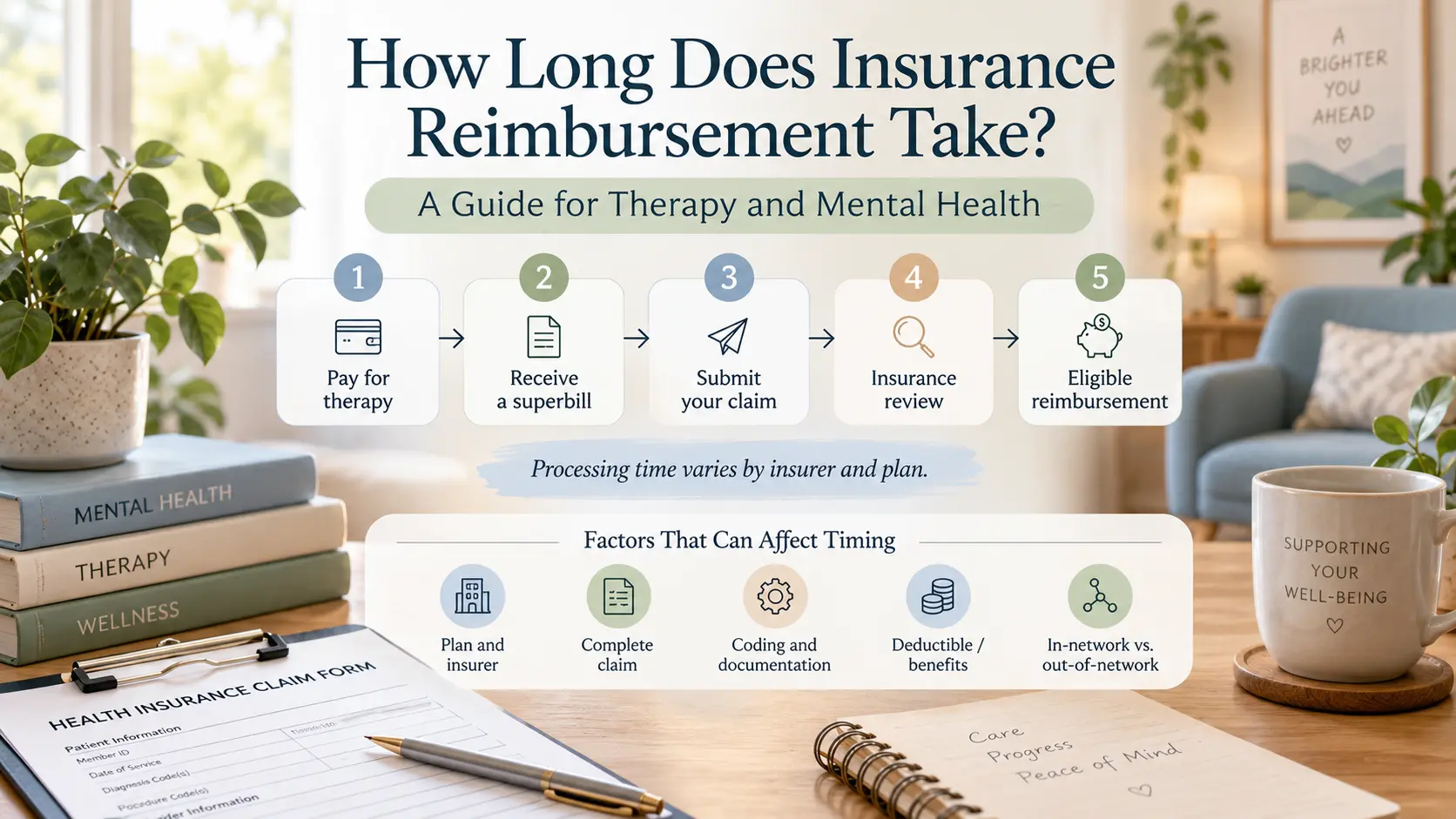
3 Delayed reimbursement Even when your plan covers therapy, reimbursement often takes 2–6 weeks after you submit a claim.
The “Deductible Wall” (Why People Quit Therapy Early)
These factors create a predictable pattern:
- You start therapy expecting insurance to help
- You pay $150–$250 per session
- Costs add up quickly
- You stop before reaching your deductible
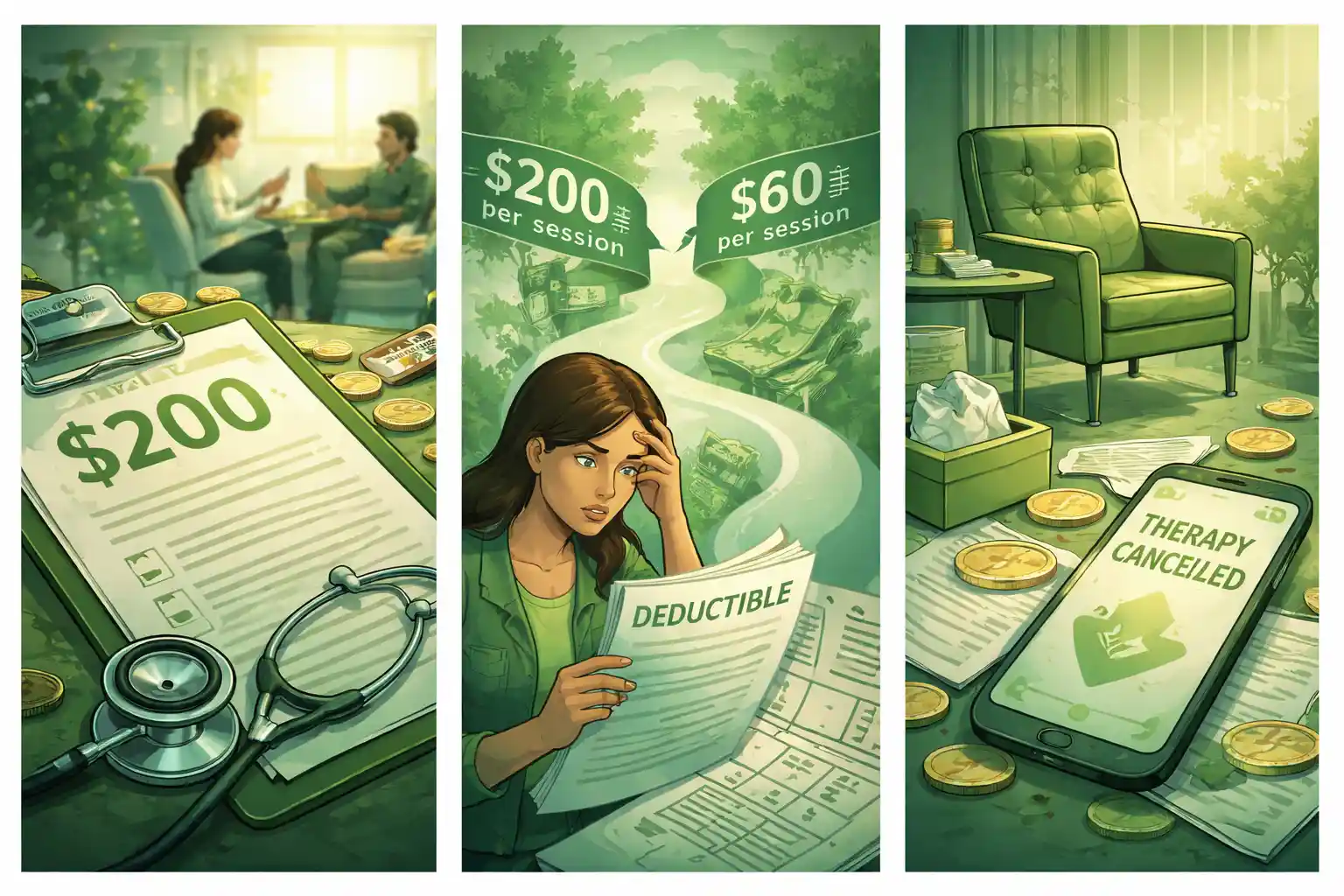
This drop-off point is what we call the deductible wall.
It’s one of the biggest hidden barriers in mental healthcare:
👉 People don’t stop because therapy doesn’t work 👉 They stop because it becomes financially unsustainable before insurance kicks in
This drop-off isn’t random — it follows a predictable pattern based on cost, timing, and reimbursement delays.
Use our tool to see how cost impacts therapy retention over time.
How Much Does Therapy Cost With Insurance?
Here’s what therapy actually looks like financially:
| Stage | What You Pay |
|---|---|
| Before deductible | $150–$250 per session |
| After deductible (in-network) | $20–$60 copay |
| Out-of-network reimbursement | 50–80% reimbursed |
| Final effective cost | ~$60–$140 per session |
💡 Real Example
- Session cost: $200
- Deductible not met → you pay $200
- After deductible → insurance covers 60%
- You receive $120 back
- Final cost: $80
👉 The problem: most people never reach this stage.
In-Network vs Out-of-Network Therapy
Understanding this distinction is critical.
In-Network Therapy
- Lower upfront costs (copays)
- Limited provider options
- Often long wait times
Out-of-Network Therapy
- Pay full price upfront
- Greater choice of therapists
- Eligible for reimbursement
👉 Important insight: Many of the most sought-after therapists operate out-of-network, which shifts cost burden to the patient.
Can You Use Insurance If Your Therapist Doesn’t Accept It?
Yes, and this is one of the most overlooked opportunities to save money.
If your plan includes out-of-network benefits, you can still get reimbursed.
How it works:
- Pay for your session
- Receive a “superbill” from your therapist
- Submit it to your insurance provider
- Get reimbursed (typically 50–80%)
Why Most People Never Use Their Benefits
Despite potential savings, many people don’t use out-of-network benefits because:
- The process is confusing
- Claims must be submitted manually
- Reimbursement takes weeks
- You still need to afford the upfront cost
This creates a paradox:
👉 People have coverage — but don’t use it
A Better Way to Pay for Therapy
The biggest shift in mental healthcare right now isn’t about coverage - it’s about when you pay.
Instead of:
- Paying $200 upfront
- Filing claims manually
- Waiting weeks for reimbursement
Newer solutions focus on:
- Verifying your benefits before your first session
- Estimating your real cost upfront
- Reducing what you pay at the time of care
This approach removes the financial friction that causes people to drop off early.
How to Check If Your Therapy Is Covered

If you want to verify your benefits, ask your insurance provider:
- Do I have out-of-network mental health coverage?
- What is my deductible?
- What percentage is reimbursed?
- Do I need pre-authorization?
These answers determine your real cost, not just your theoretical coverage.
FAQ
Is therapy covered by insurance?
Yes, most health insurance plans cover therapy. However, you may need to pay the full cost upfront until you meet your deductible, after which insurance may reimburse a portion.
How much does therapy cost with insurance?
Therapy typically costs $150–$250 per session. After insurance reimbursement, the effective cost is often $60–$140 per session, depending on your plan.
Can I get reimbursed for out-of-network therapy?
Yes. Many insurance plans reimburse 50–80% of out-of-network therapy costs after you submit a claim using a superbill.
Why is therapy still expensive with insurance?
High deductibles, limited in-network providers, and delayed reimbursement mean many people pay full price upfront — making therapy feel expensive even when it’s covered.
The Bottom Line
Therapy is covered by insurance — but that doesn’t mean it’s affordable when you need it.
The real challenge isn’t whether your plan includes mental health benefits. It’s whether you can afford to use them consistently.
Once the upfront cost barrier is reduced, therapy becomes far more accessible — and sustainable over time.